4 hr
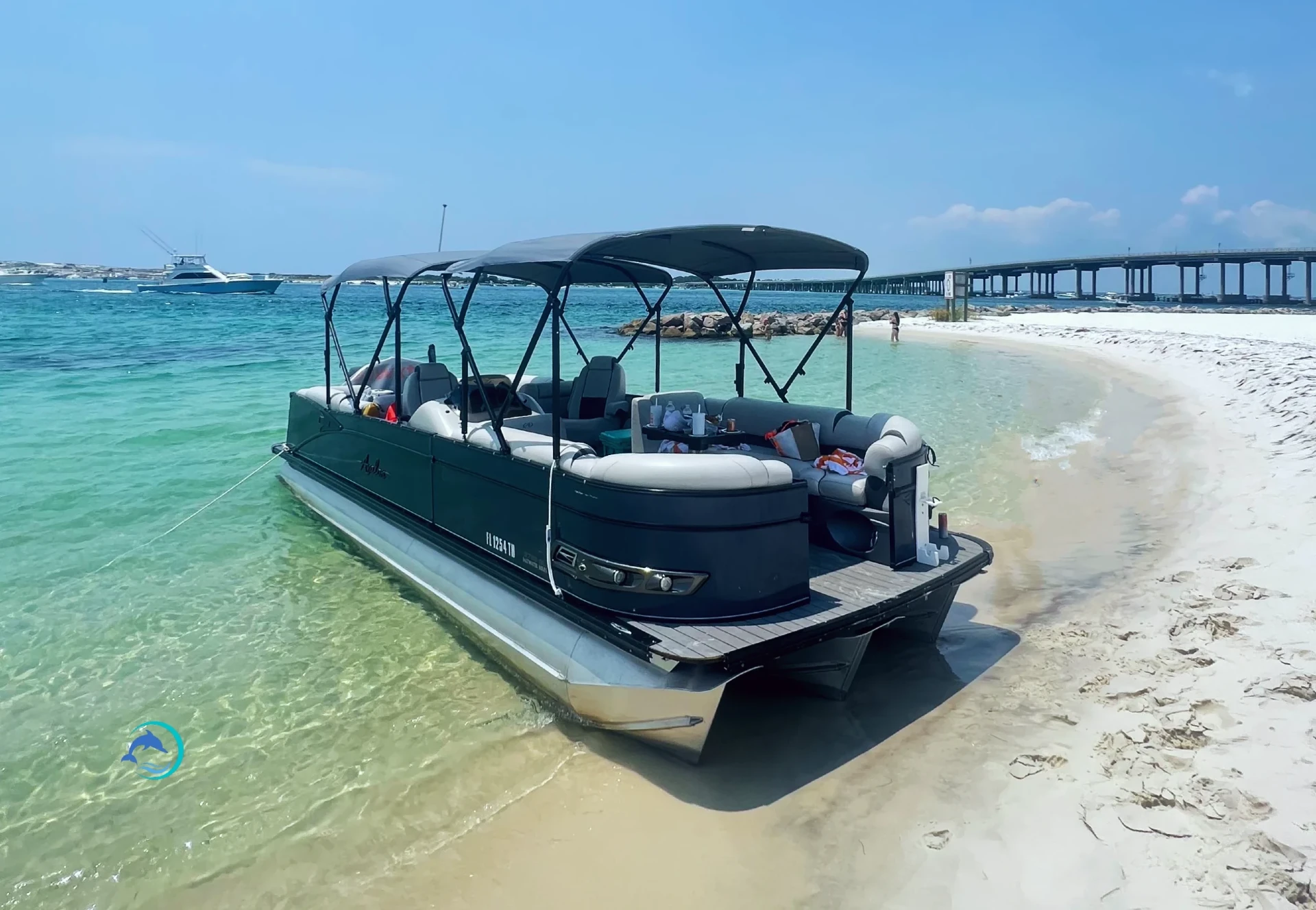
Crab Island 4-Hour Charter Adventure
- Entry ticket
- Mobile voucher
- Valid same day
- Free cancellation
Crab Island Pontoon Tours — Sandbar Excursions & Floating Adventures
Anchor in turquoise shallows, wade through waist-deep sandbars
Compare fares, pick the fit — all bookings are mobile-voucher and eligible for free cancellation where shown.
4 hr
3 hr
3 hr
Worth it for social groups and families
Crab island pontoon tours deliver exactly what the sandbar promises: a floating party anchored in waist-deep emerald water. Charter adventures run four hours, giving you time to swim, eat from floating vendors, and claim a spot before the midday rush. Sandbar cruises condense the experience into shorter windows, while floating tiki pub options add novelty with themed vessels. Free entry means you're paying purely for the boat ride and captain—no admission gates or upsells once you anchor. The shallow Choctawhatchee Bay stays calm most days, making it accessible even for non-swimmers. Value hinges on group size: split a charter four ways and you're looking at reasonable per-head cost for several hours on the water. Solo travelers or couples may find better economics in joining a shared sandbar excursion. If you want the Destin sandbar scene without renting your own boat, guided pontoon options are the most straightforward route.
Bottom line: Crab island pontoon tours tours are worth it if you value hassle-free access over DIY boat rental, especially for groups splitting the cost.
Professional excursion services provide stress-free navigation, while personal rentals offer complete autonomy for those comfortable handling a marine vessel. Booking crab island pontoon tours tickets simplifies your logistics, whereas self-guided trips allow more flexibility for experienced boaters.
|
Top pick Captained Tours |
Private Rental | |
|---|---|---|
| Navigational Responsibility | Captain handles all operation | Renter assumes full control |
| Cost Flexibility | Fixed price per person | Variable based on fuel and deposit |
| Local Knowledge | Professional guide provided | Requires self-directed navigation |
| Capacity | Varies by vessel size | Limited by rental boat limit |
| Ease of Planning | All-inclusive excursion package | Requires safety checks and logistics |
| See tickets & prices |
Verdict: Most visitors seeking a relaxing Destin landmark outing prefer the convenience of a crab island pontoon tours tour, while those prioritizing privacy choose the self-directed path offered by a private boat rental.
Hand-picked experiences loved by thousands of travelers
4 hours
Free Cancellation
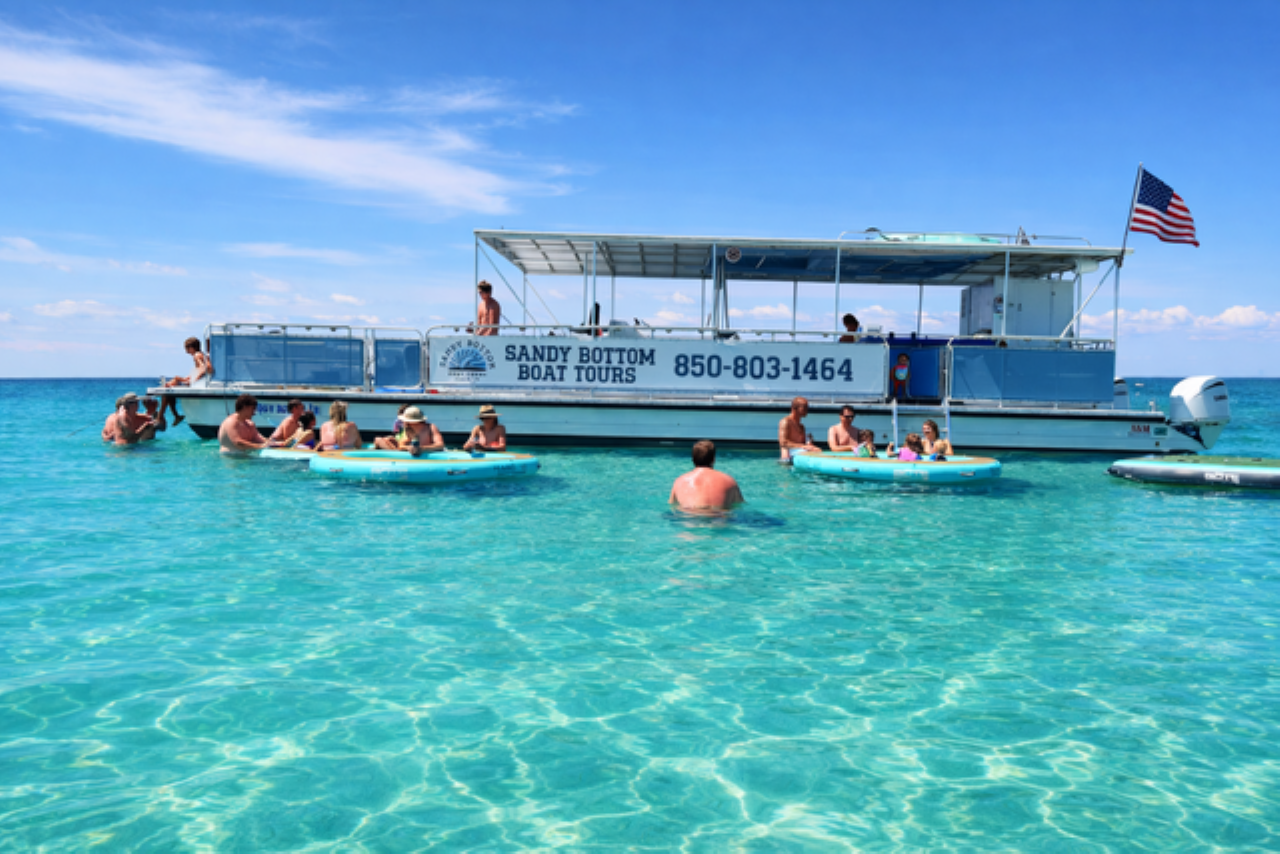
Cruise to Destin's famous sandbar for swimming, floating, and dolphin spotting on a relaxed group outing
3 hours
Free Cancellation
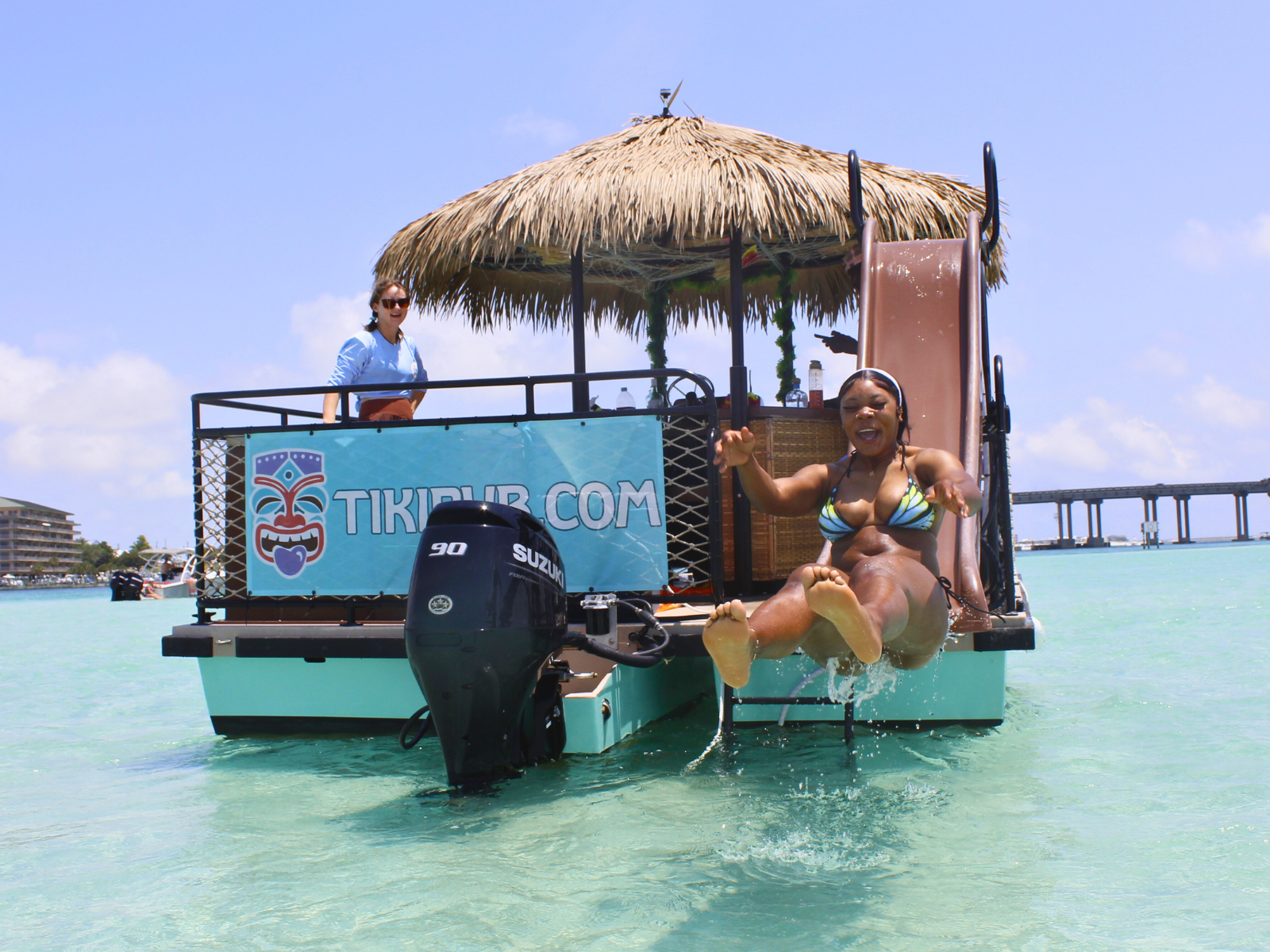
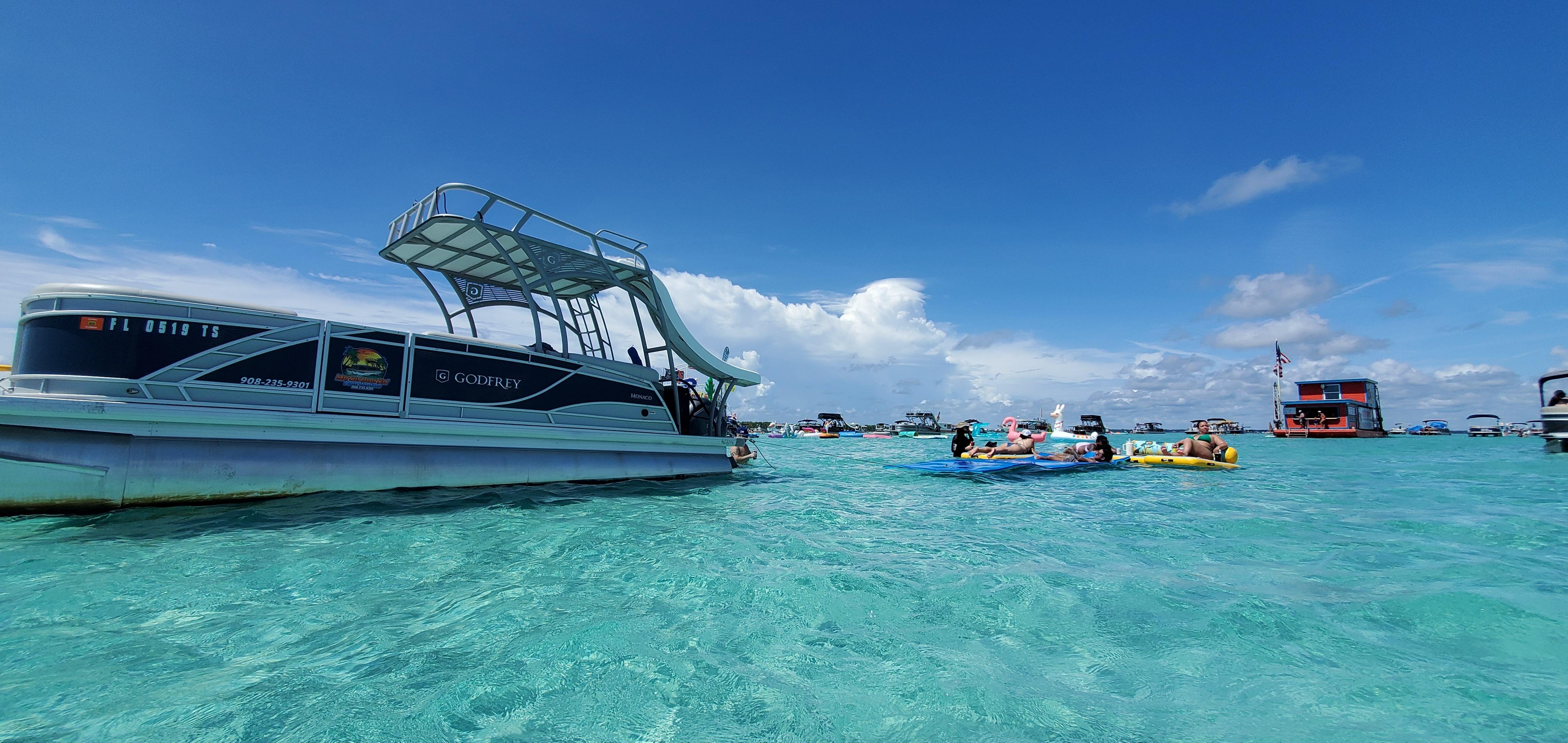
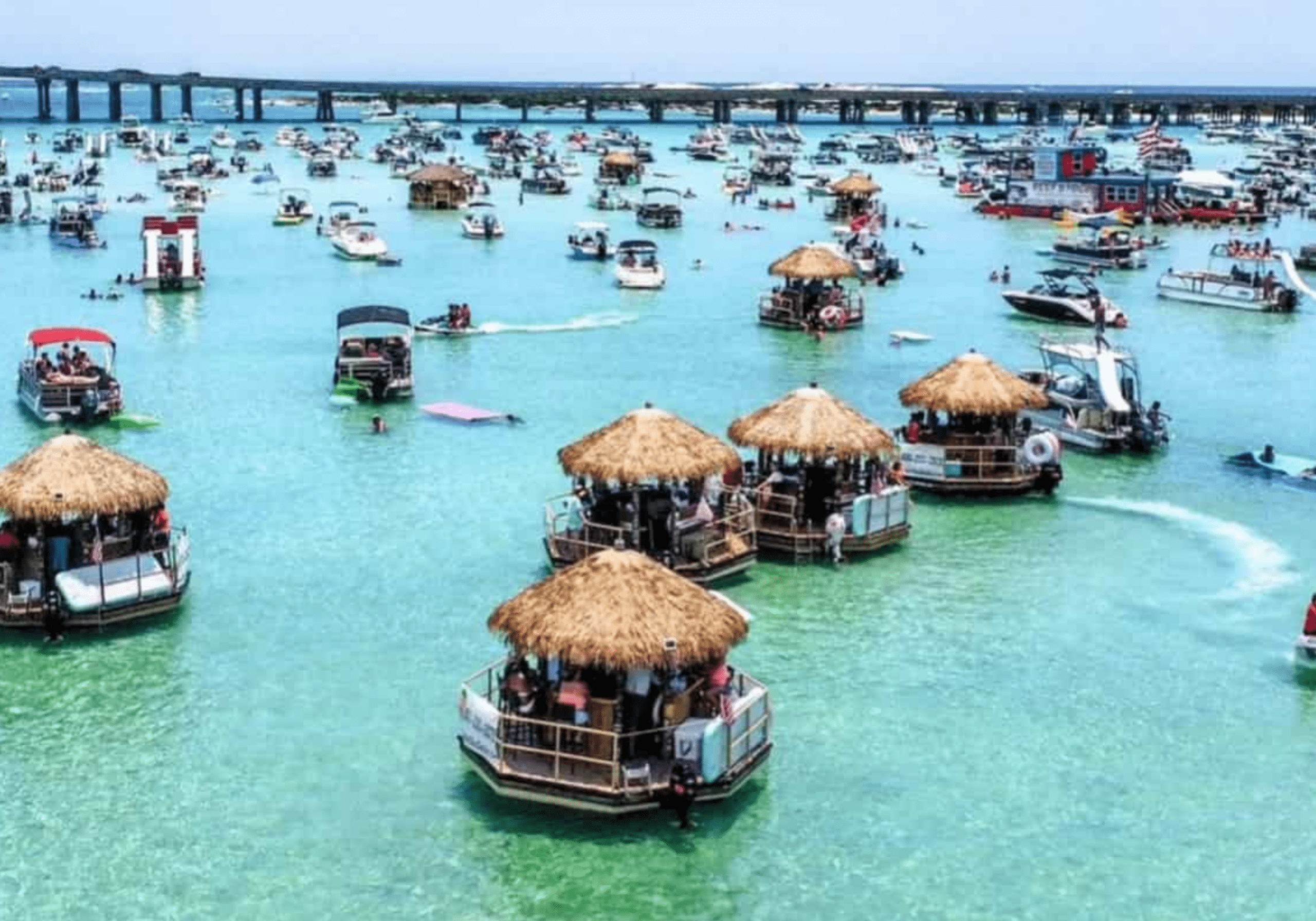
Cruise to Crab Island aboard a floating tiki bar with waterslide, dolphin sightings, and island vibes
4 hours
Free Cancellation
Cruise to Florida's famous Crab Island aboard a modern 50-foot vessel with bar, restrooms, and water toys
3 hours
Free Cancellation
Sail to a legendary Destin sandbar for swimming, paddleboarding, and waterside relaxation
3–4 hours (varies by season)
Free Cancellation
Cruise to a stunning sandbar playground, paddleboard through calm shallows, and watch for dolphins along the way
4 to 8 hours
Free Cancellation
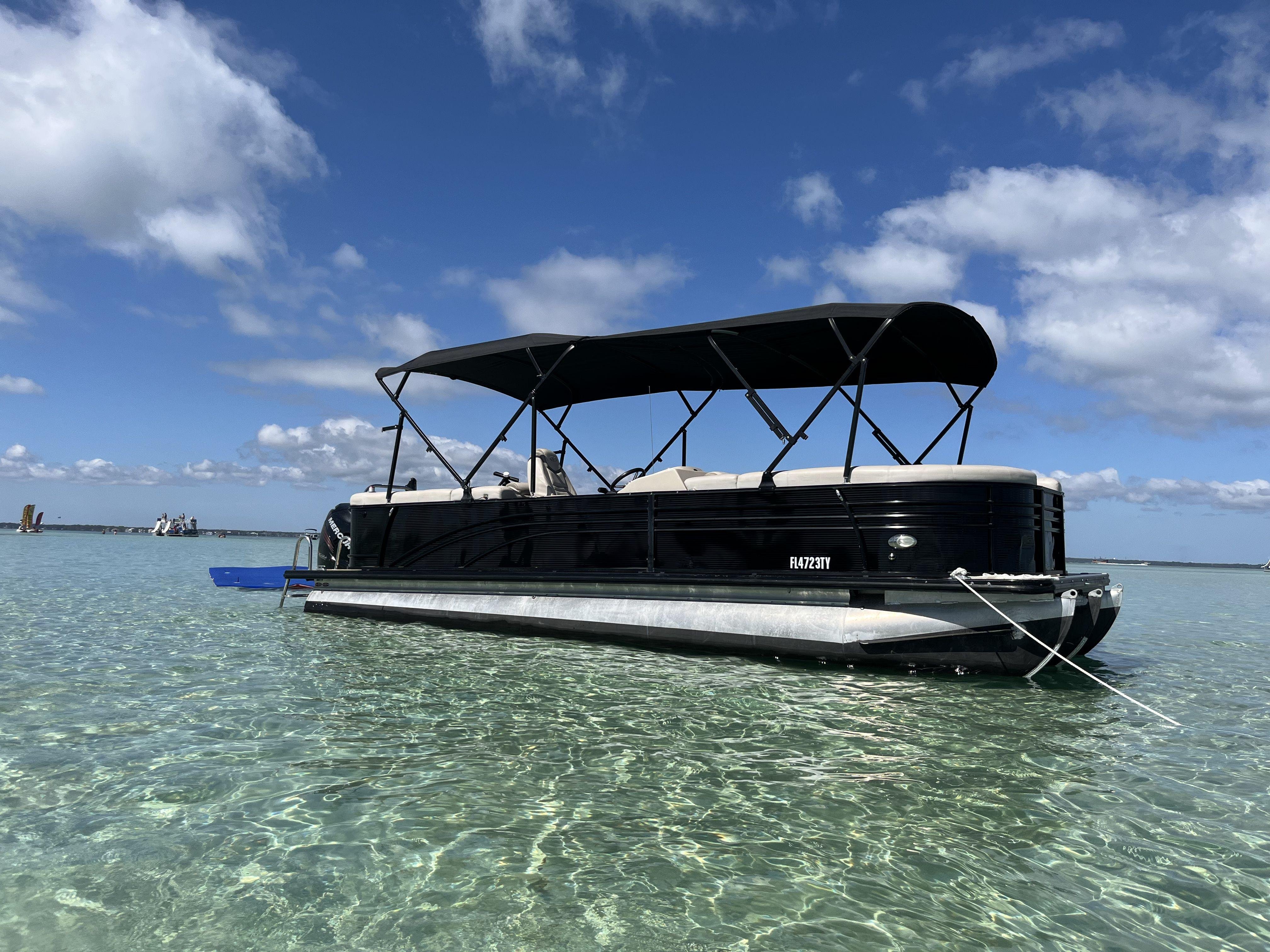
Explore emerald waters at your own pace aboard a spacious pontoon with gear, shade, and Crab Island access
4 hours
Free Cancellation
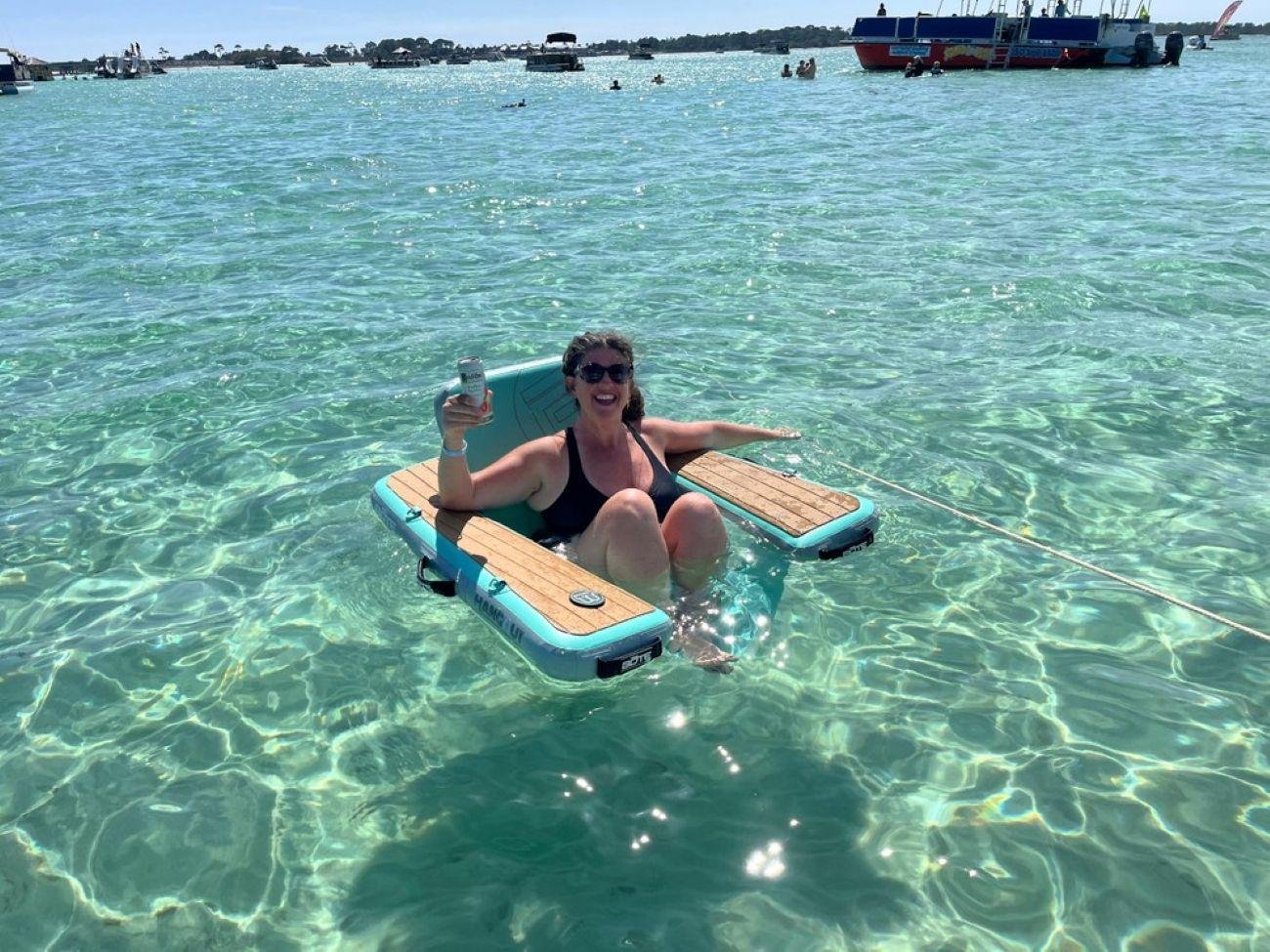
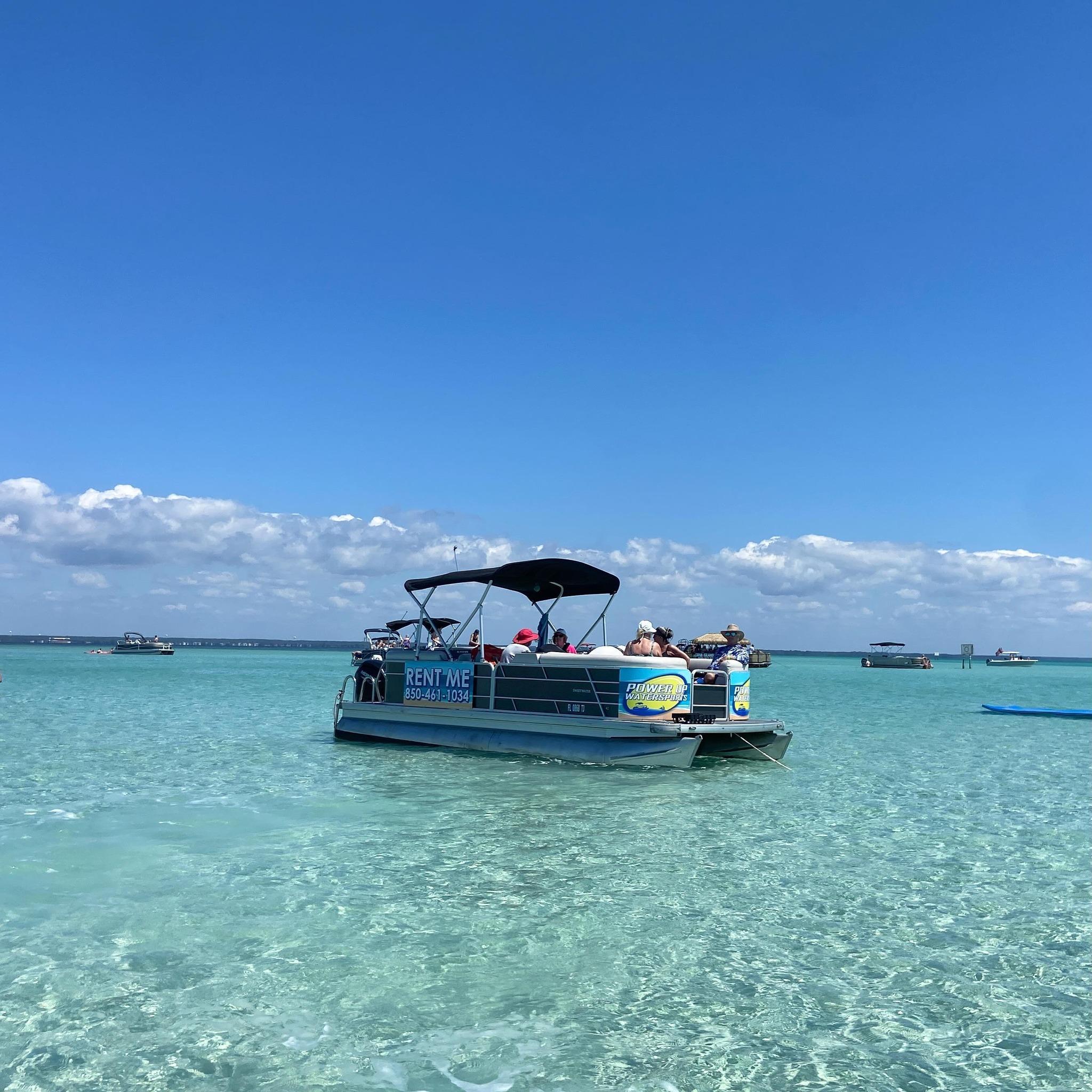
Charter a private pontoon with an expert skipper and cruise to Crab Island with water toys, paddleboards, and a floating lily pad.
4 hours
Free Cancellation
Sail to Crab Island aboard a two-level pontoon with water toys, dolphin spotting, and space for 12 guests
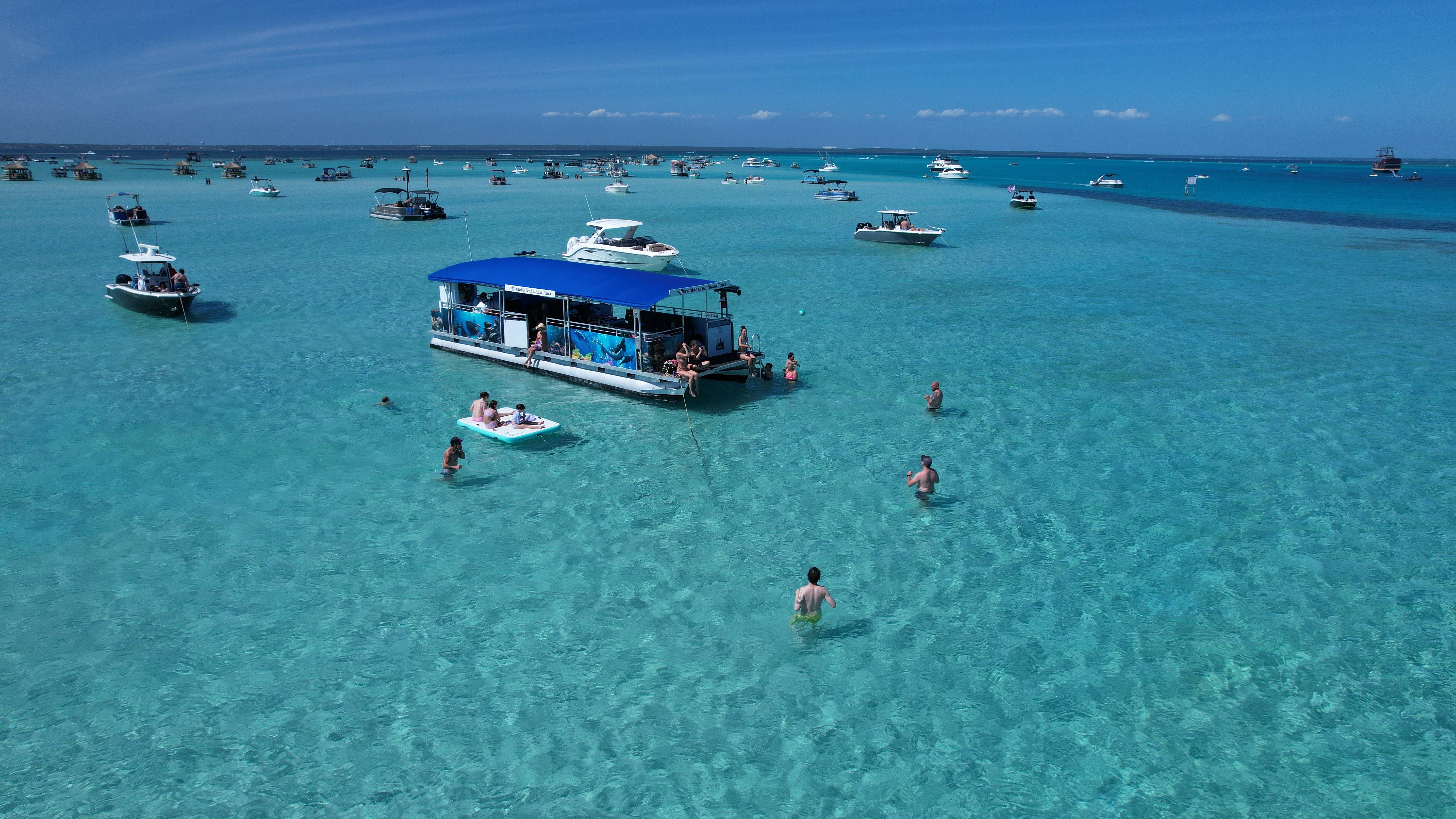
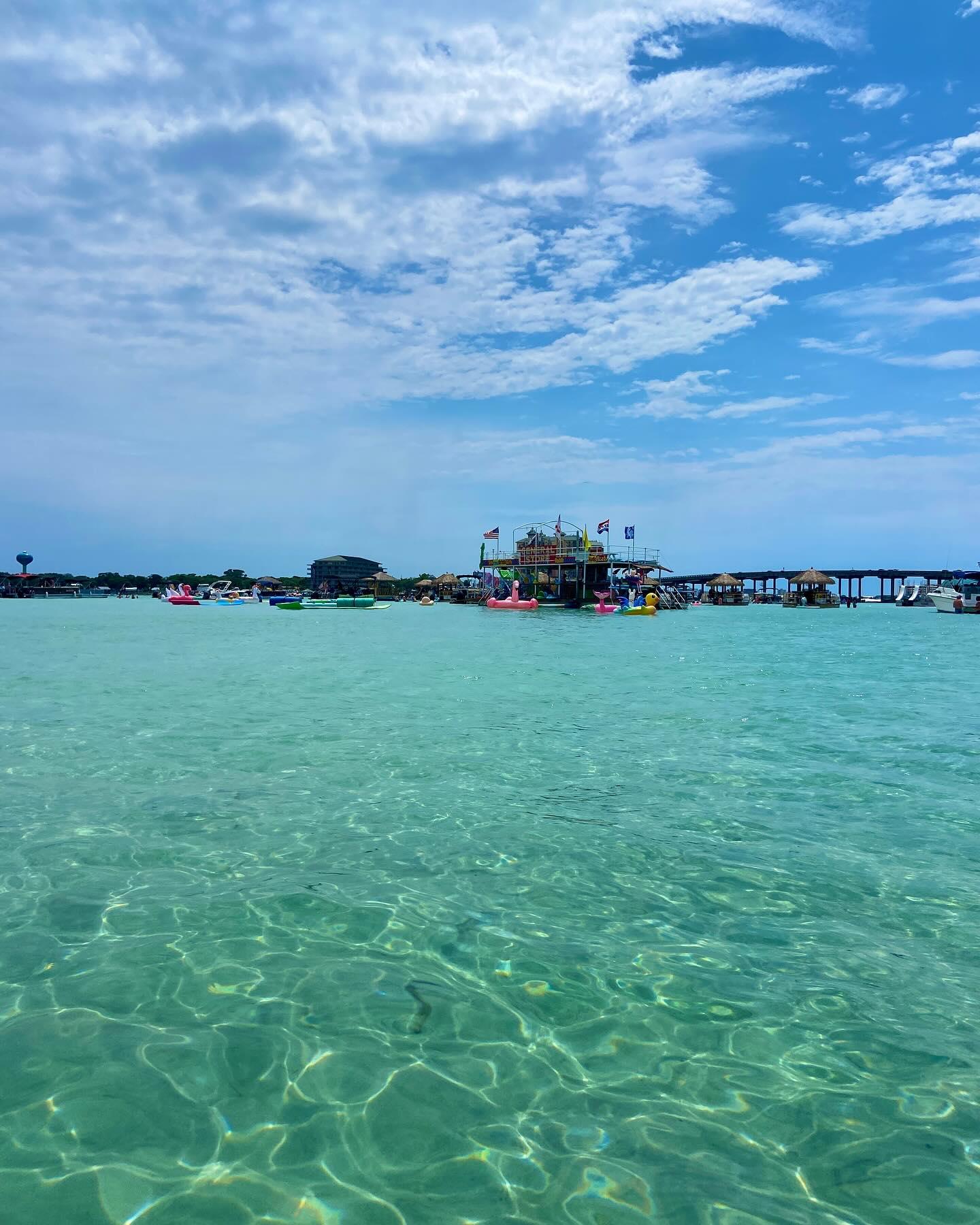
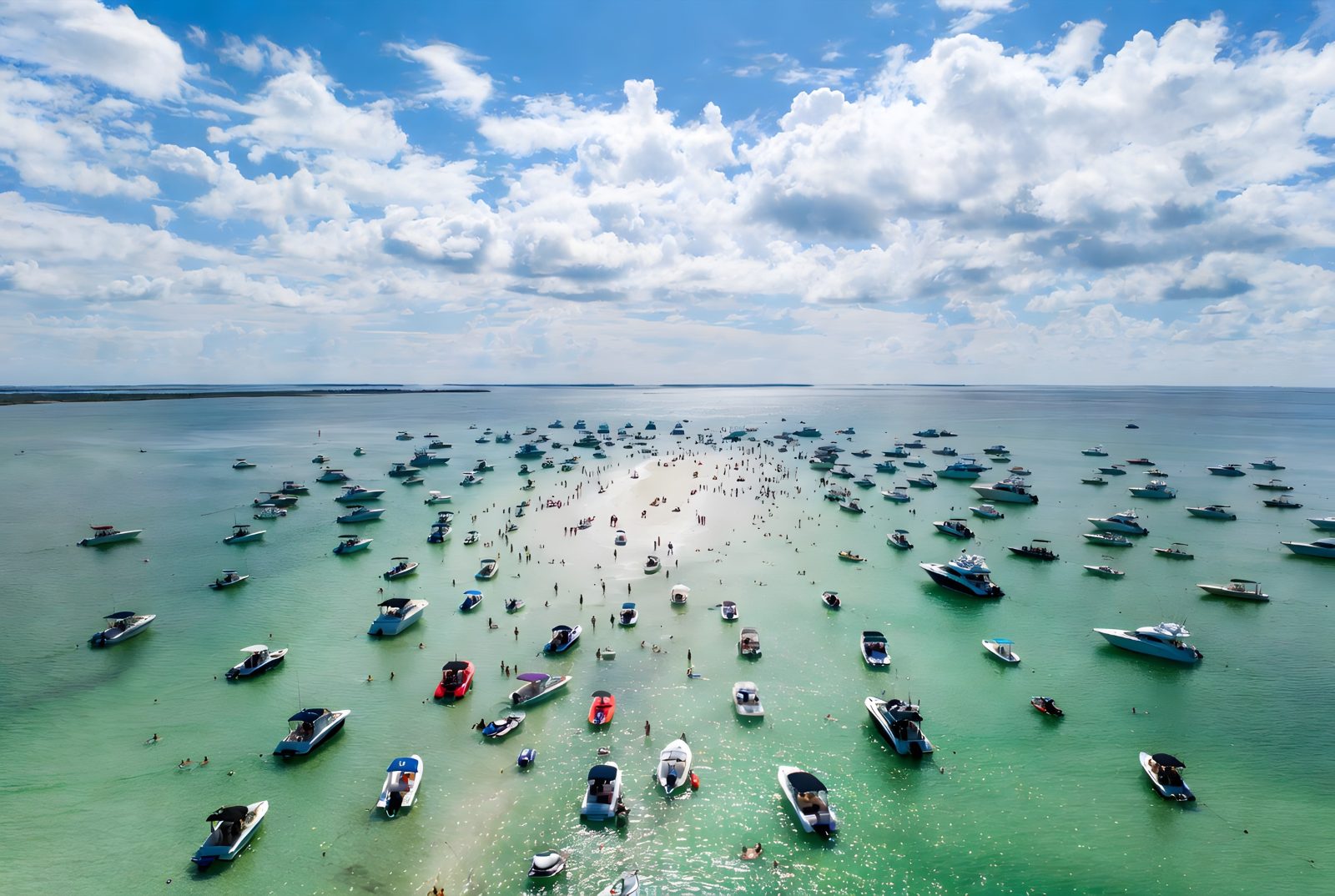
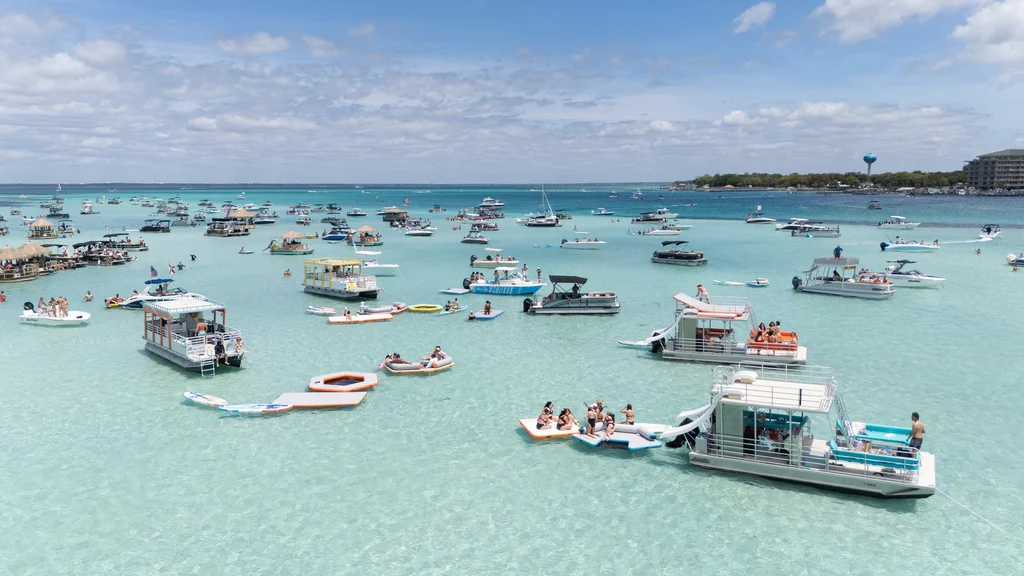
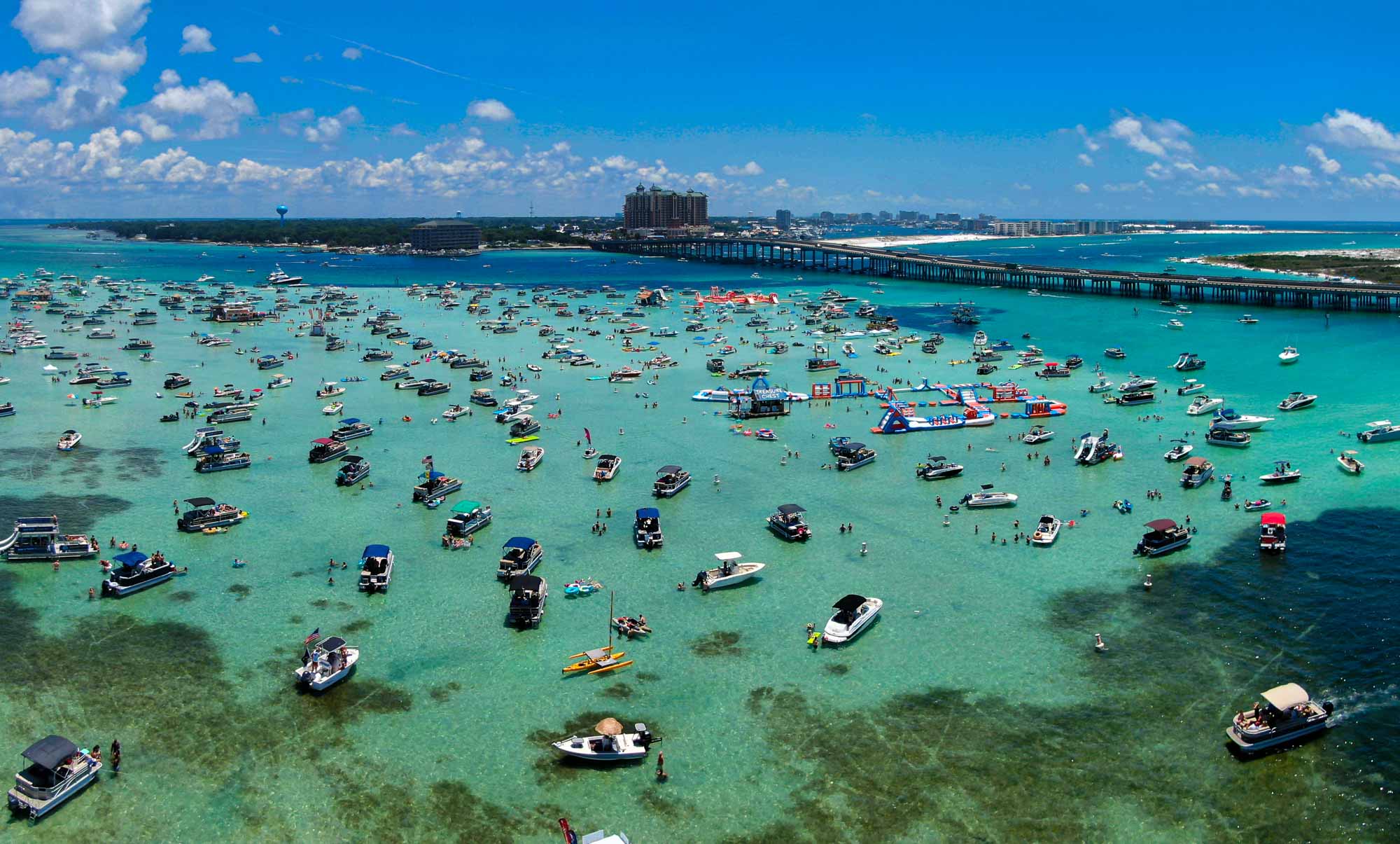
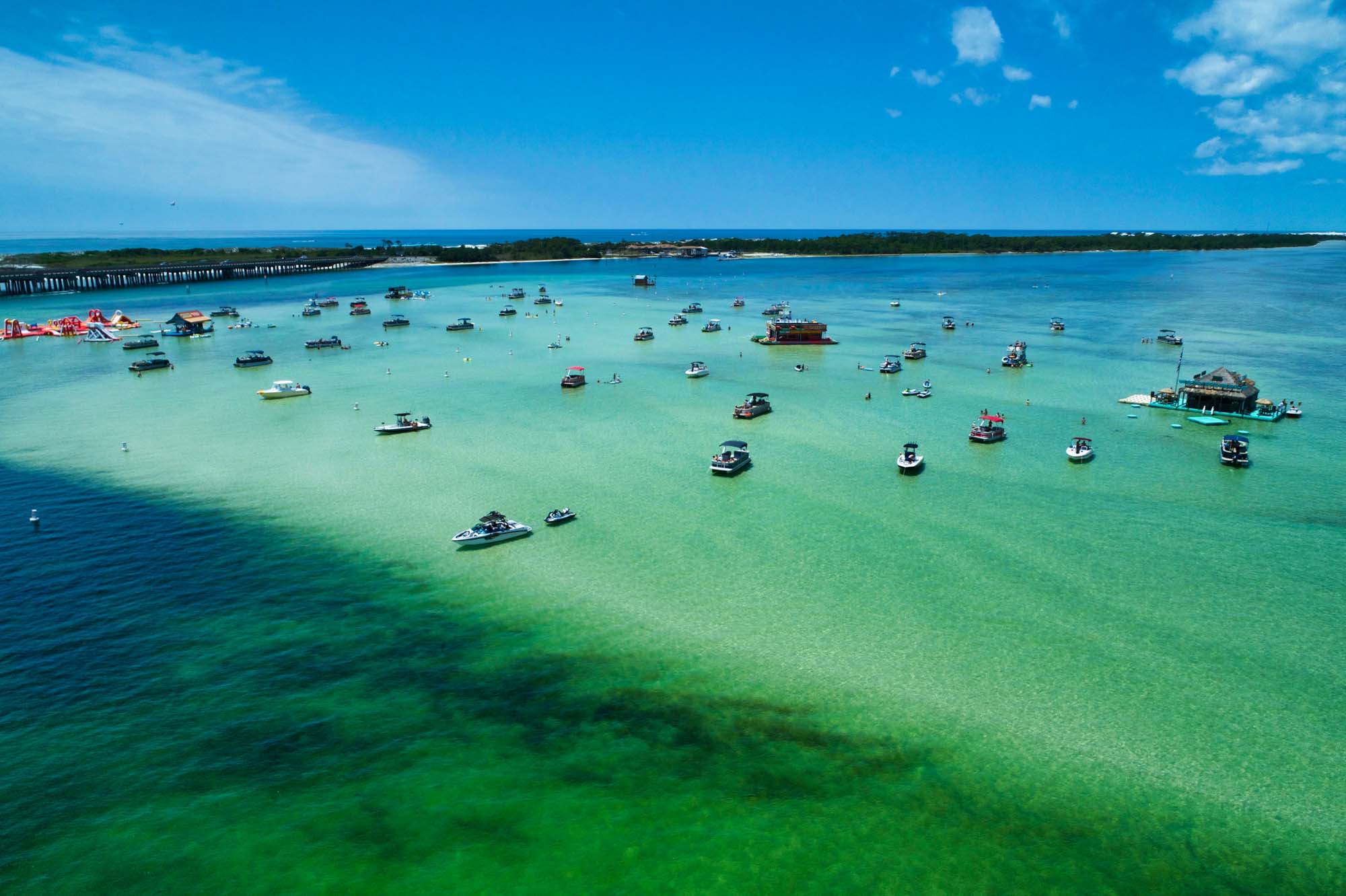
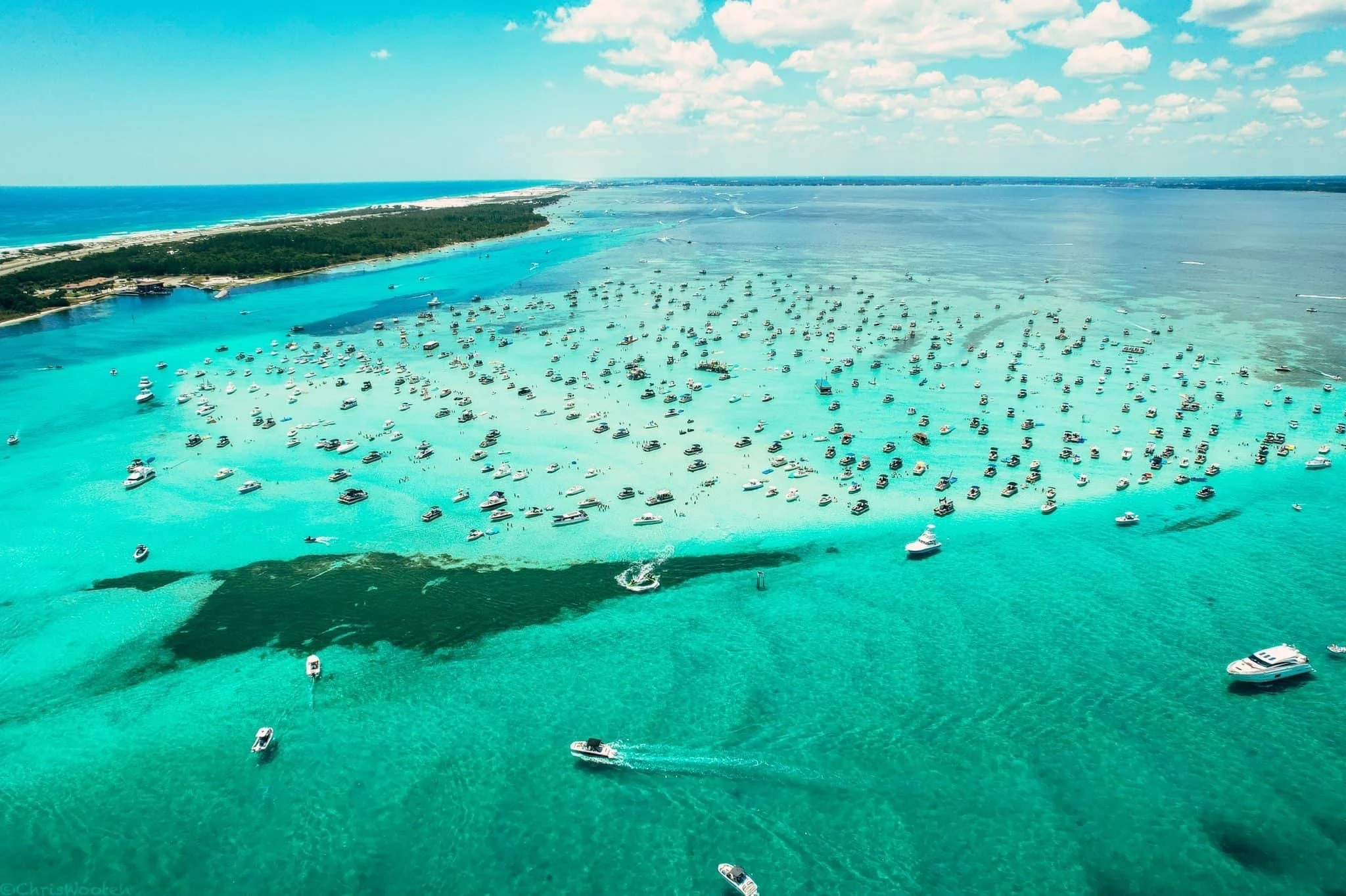
The central shallow area where hundreds of boats anchor to enjoy the 1–4 foot emerald water.
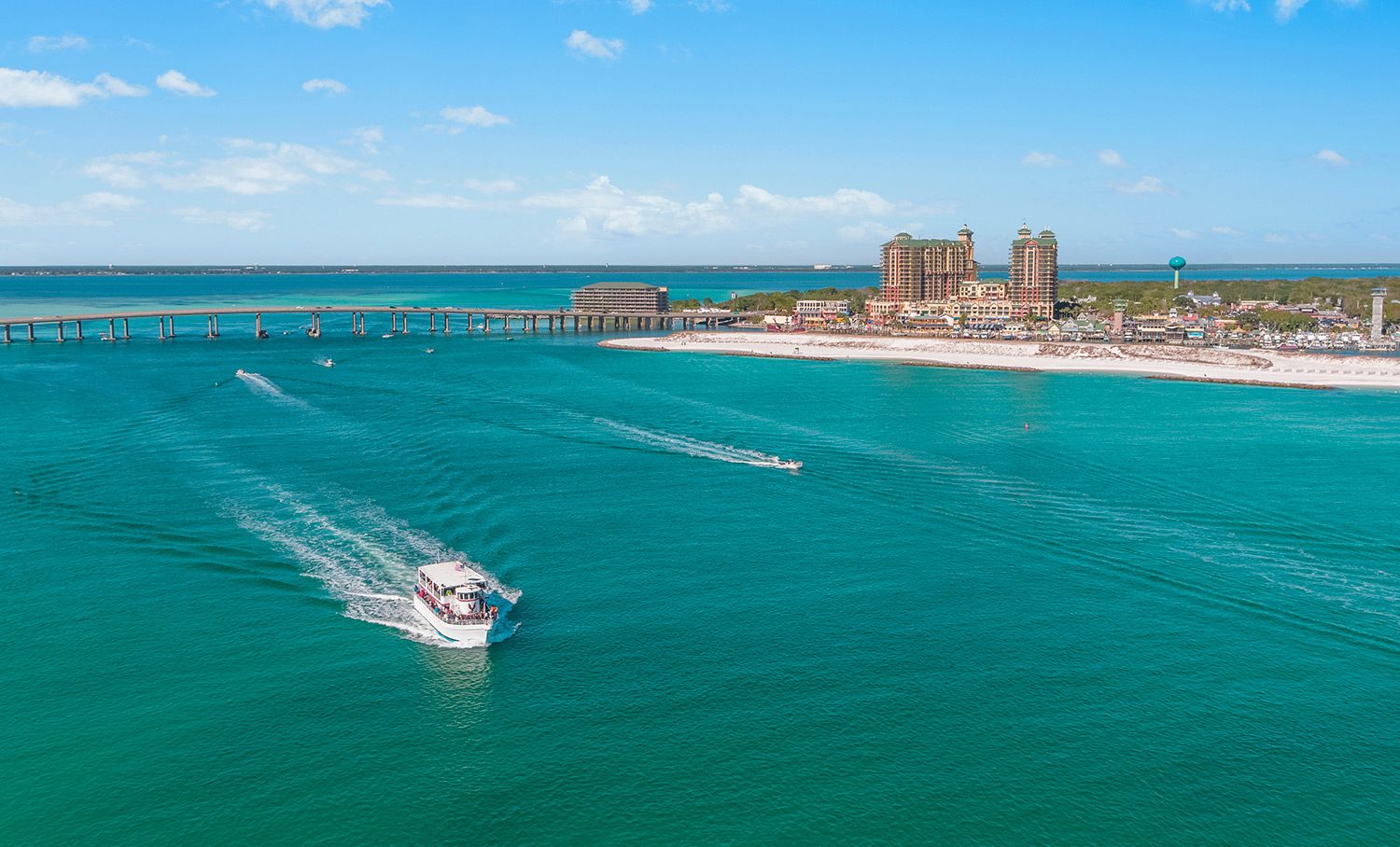
A deeper corridor with strong tidal currents separating the bay from the Gulf of Mexico.
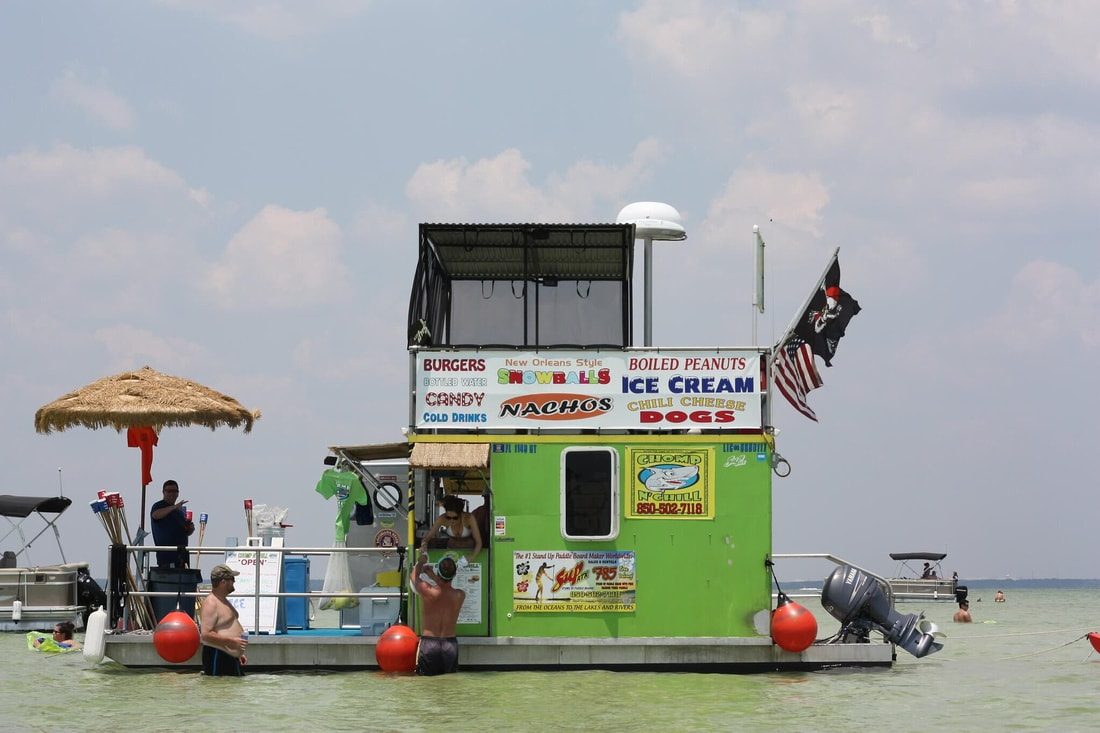
Mobile boat shops providing ice cream, snacks, and souvenirs directly to anchored visitors.
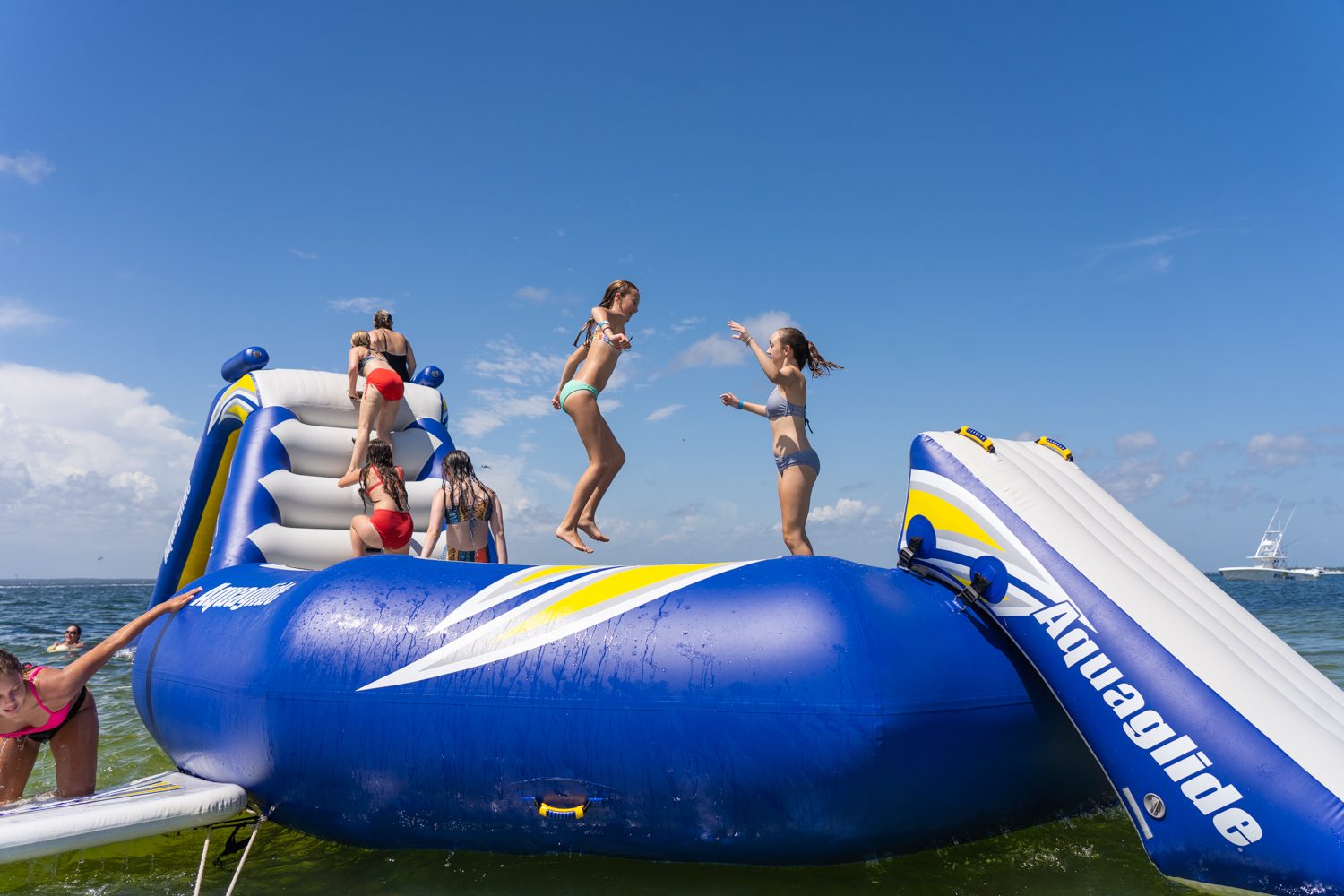
Temporary water-based obstacle courses and trampolines available for guests during peak season.
You board at Destin Harbor as crew members secure coolers and distribute life vests. The pontoon clears the no-wake zone and accelerates across jade water, spray misting the bow as pelicans skim past. Ahead, the Marler Bridge frames a mosaic of anchored boats clustered in shallow water.
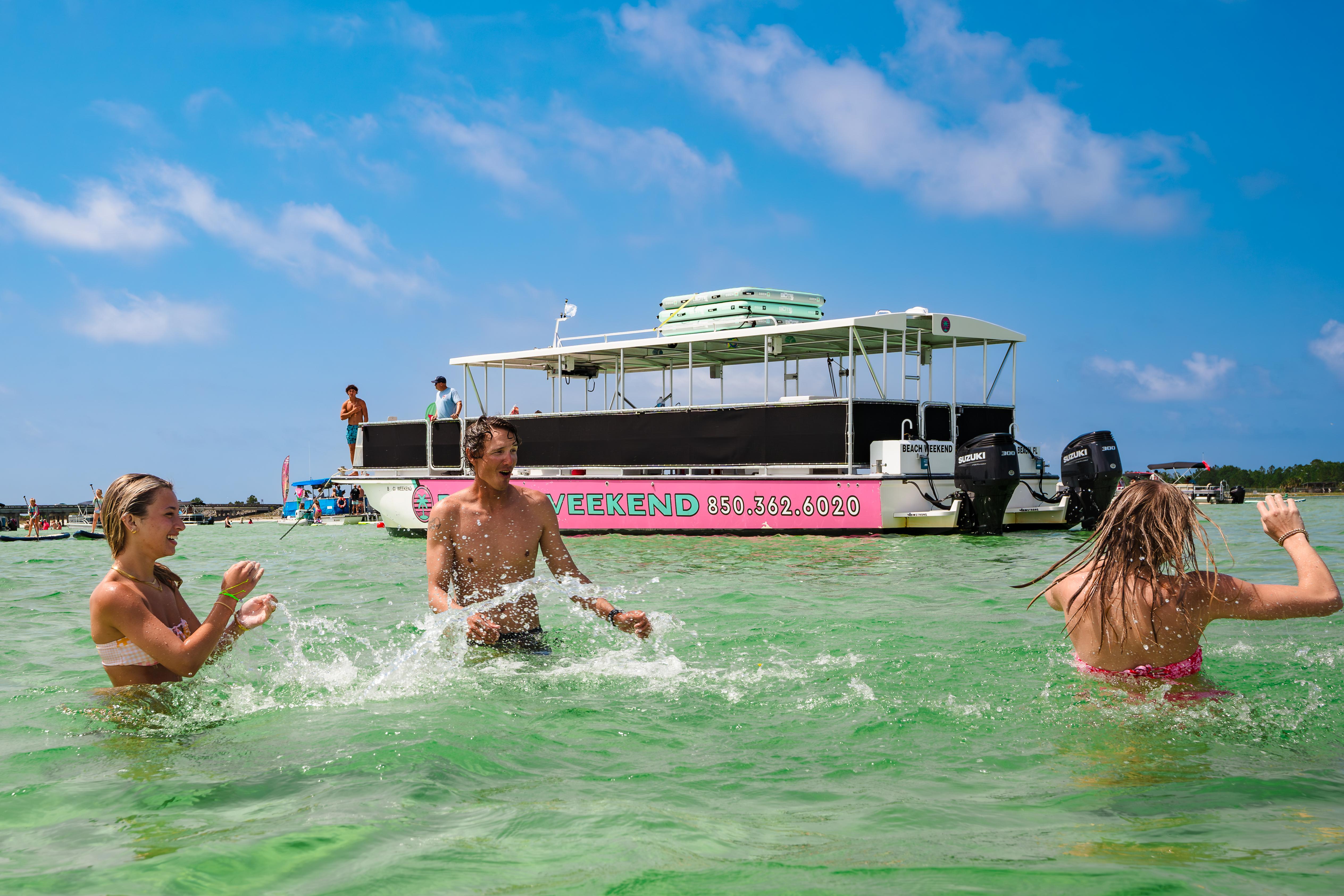
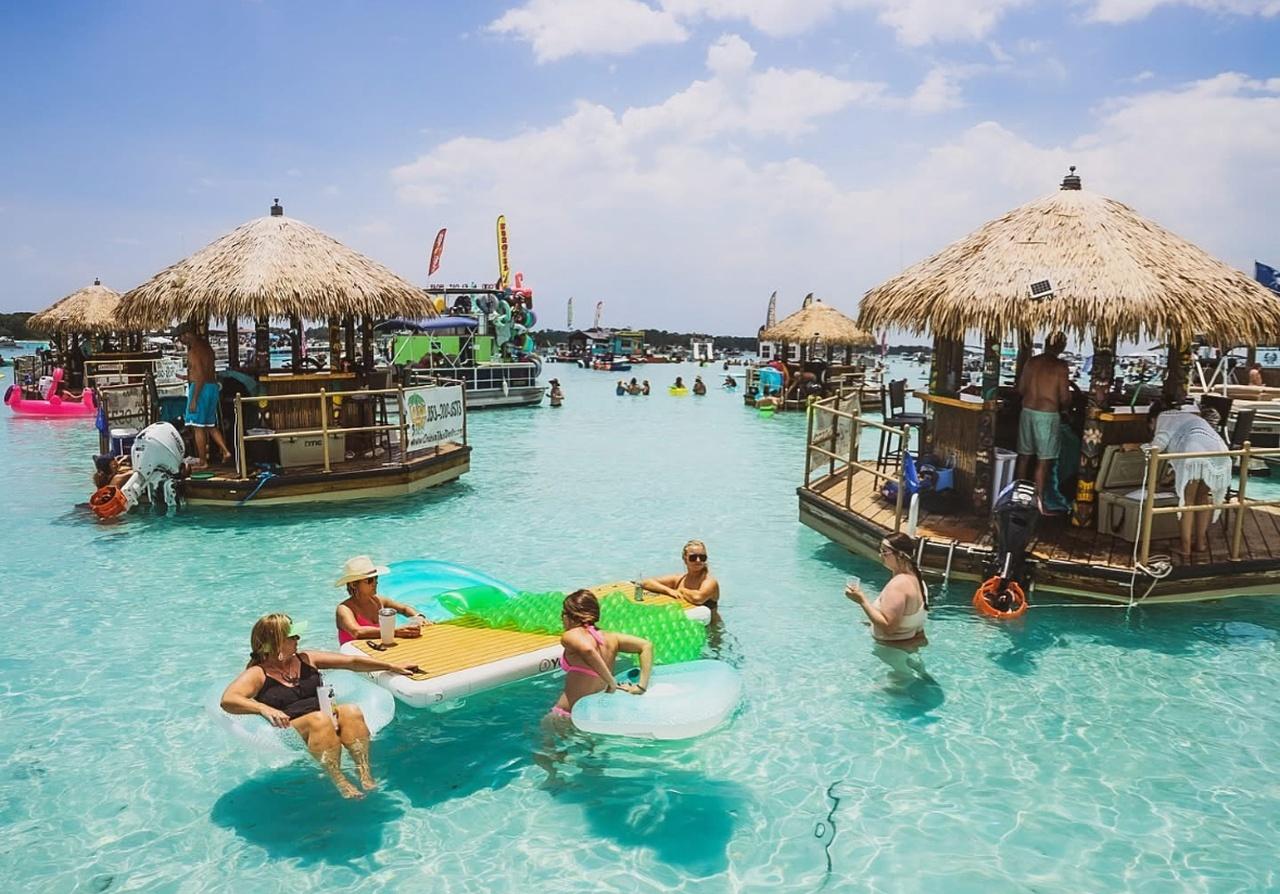
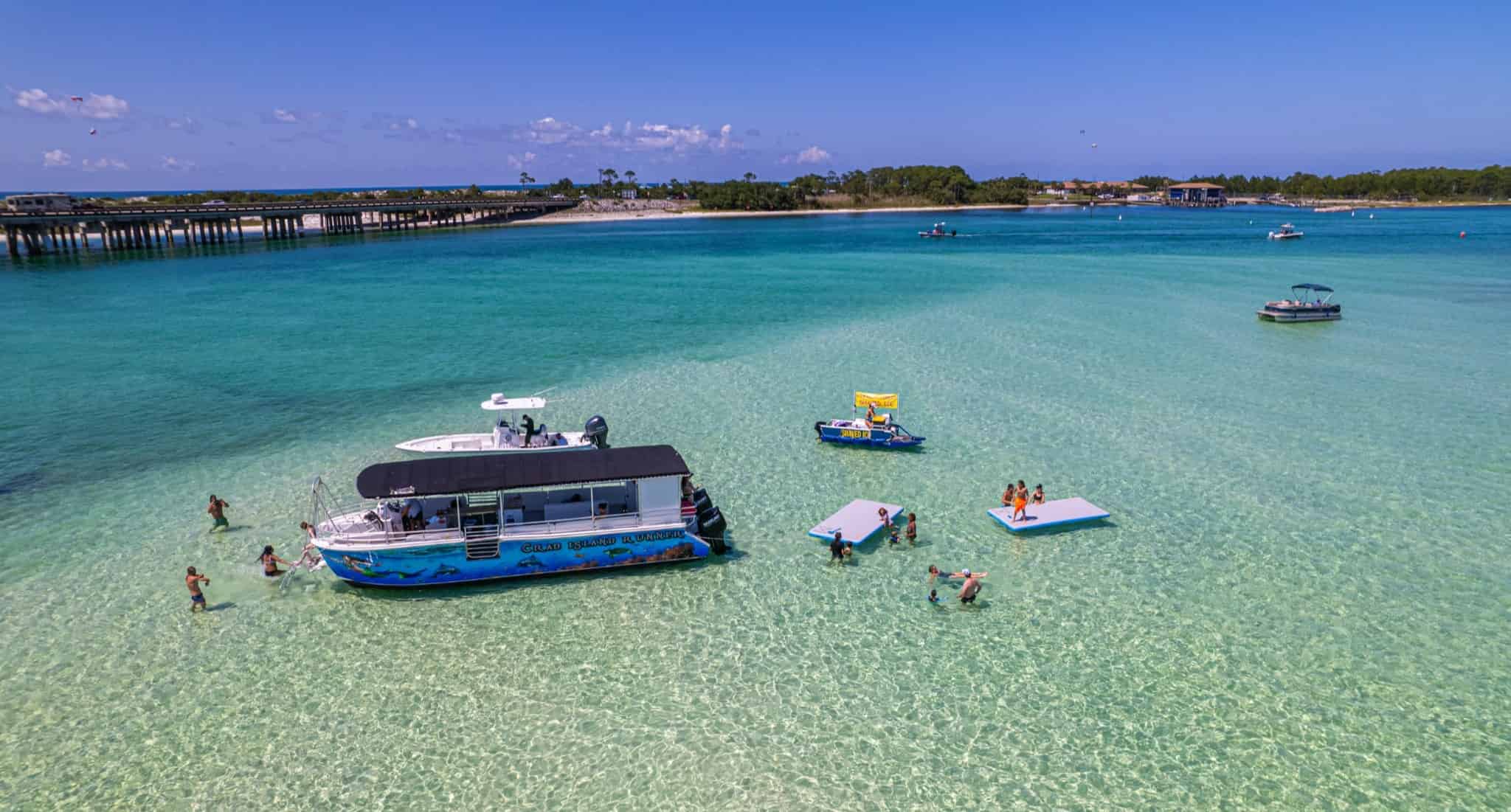
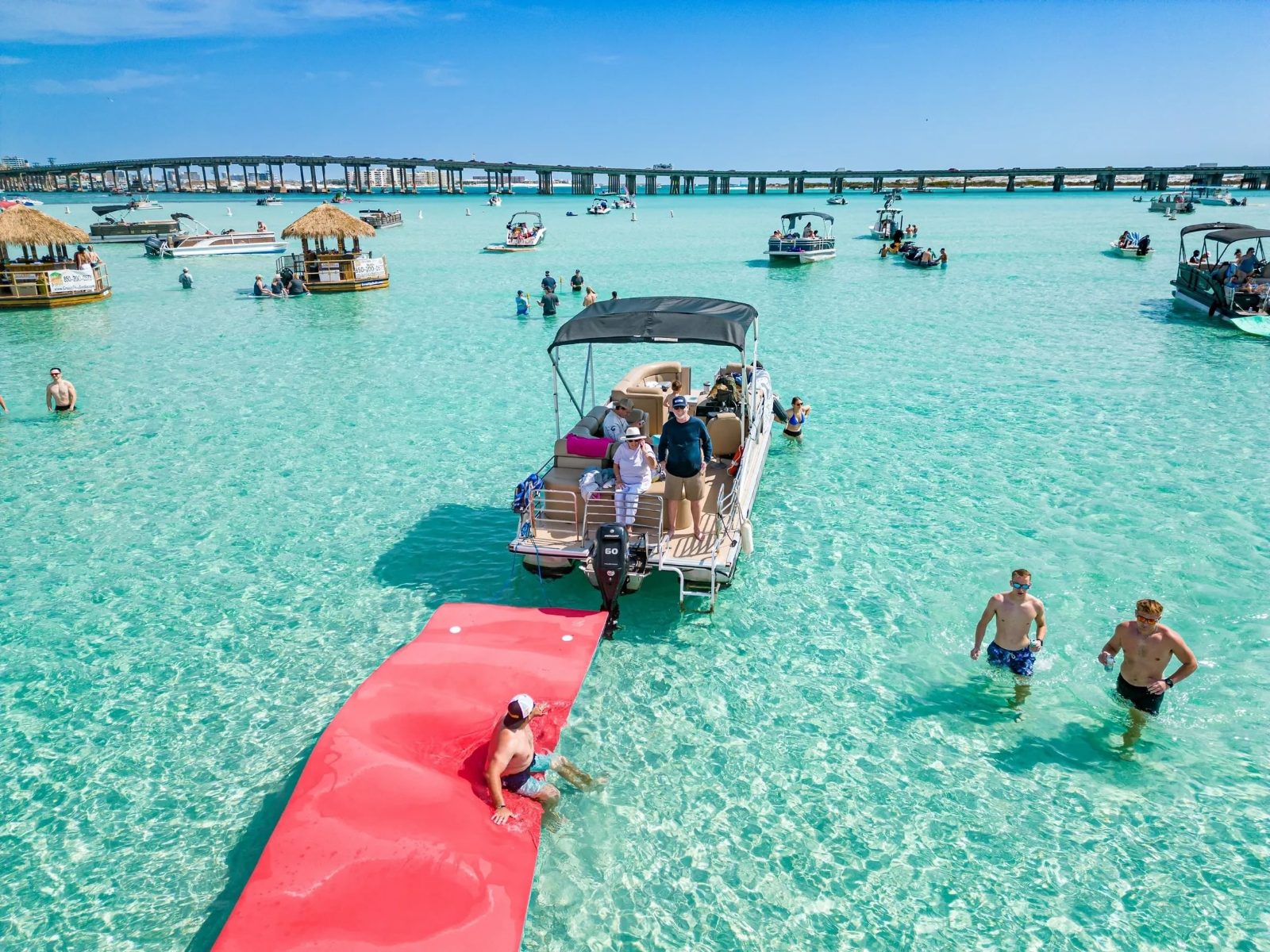
You arrive at the sandbar and the captain kills the engine, letting the vessel drift into position. The anchor splashes down and you step off the swim platform into water that reaches mid-thigh. The bottom is firm sand, cool underfoot. You wade fifty meters toward deeper channels, passing families on floating mats and clusters of boats rafted together. A floating tiki bar drifts nearby, reggae echoing across the flat water.
You pull on snorkel gear and dip beneath the surface. Visibility stretches in every direction, revealing ripple patterns in the sand and schools of silver minnows darting through patches of turtle grass. A stingray glides past, wings undulating. You surface, float on your back, and watch afternoon clouds drift eastward over the bay. The water holds you effortlessly, saline and warm, the boat a dark shape against the sun.
All the details about your upcoming adventure in one place
Crab Island is not an island. The submerged sandbar in Choctawhatchee Bay disappeared beneath the surface in 1960 when the Destin Pass jetties altered Gulf currents and deepened the channel.
What remains is a shallow plateau roughly 500 meters long, its depth fluctuating between one and four feet depending on tide cycles. The site earned its name from the blue crabs that once populated the shallows before dredging operations shifted sediment patterns.
Today the sandbar functions as Destin's floating social hub from April through October. On summer weekends, more than 800 watercraft anchor in a loose grid across the emerald shallows, creating a temporary city of pontoon boats, catamarans, and paddleboards. Floating vendors raft alongside anchored vessels selling barbecue, cold drinks, and inflatable toys. A permanently moored floating stage hosts live acoustic sets most afternoons. The water temperature holds steady at 28 degrees Celsius in peak season, warm enough for extended swimming without thermal suits.
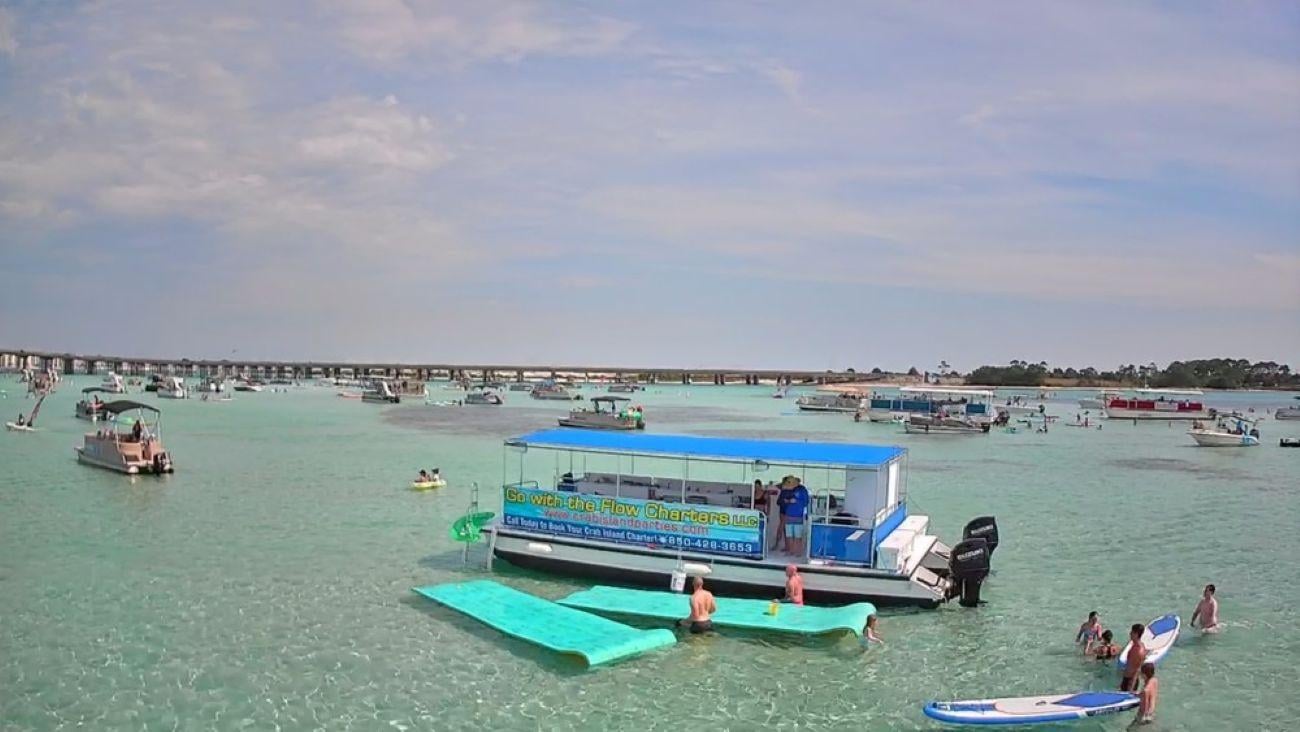
Crab island pontoon tours depart from Destin Harbor and cross the two-kilometer channel in roughly twelve minutes. The sandbar sits beneath the Marler Bridge, its north edge defined by deeper navigation channels where dolphins surface during morning transits. Visibility in the shallows reaches six meters on calm days, revealing sand dollars, hermit crabs, and occasional stingrays gliding across the rippled bottom. Most pontoon charters anchor in the western shallows where depth stabilizes near waist level for adults.
The site's ecology reflects its artificial origins. Seagrass beds have established in the surrounding deeper zones, attracting mullet schools and juvenile snappers. Snorkeling reveals scattered coral fragments and sponge clusters colonizing submerged debris. Choctawhatchee Bay water excursions rely on this hybrid environment, part natural sandbar and part human-engineered gathering space, shaped by decades of current manipulation and spontaneous social use.
More than 800 watercraft anchor across the emerald shallows on summer weekends, creating a temporary floating city.
Wear swimwear, polarized sunglasses, and protective hats while on your crab island pontoon tours. Lightweight long-sleeve shirts are recommended for sun protection throughout the day.
Use a waterproof floating bag to keep your valuables, keys, and phones secure during crab island pontoon tours. Avoid bringing unnecessary gear that could fall overboard in the shallow water.
Capture the emerald waters and vibrant boat atmosphere, but ensure your gear is protected in waterproof housing. Always respect the privacy of others while taking photos during your crab island pontoon tours.
Families enjoy the shallow 1–4 foot depths, but constant supervision is mandatory near deep-water edges. Always ensure children wear coast-guard-approved life jackets during your crab island pontoon tours.
Crab Island is a natural sandbar and is not wheelchair accessible. Boarding crab island pontoon tours requires stepping onto a boat from a dock, which may be challenging for those with mobility limitations.
Bring your own coolers packed with food and drinks for your crab island pontoon tours, as alcohol is permitted if consumed responsibly by designated drivers. Floating vendors are often available on-site, but having your own supplies is recommended.
Operating Hours
00:00–23:59 daily
Address
Crab Island, Choctawhatchee Bay, Destin, FL
Watercraft Only
Accessible only by boat or watercraft
Best Arrival
09:00–12:00 for prime anchoring
Pack Light
Bring coolers, ice, and waterproof bags
Navigation
Sandbar depth ranges 1–4 feet
Cancellations depend on the specific provider of your crab island pontoon tours. Please review your booking confirmation for the exact refund window, as entrance to the sandbar itself is 0 USD.
Recommended time
4-6 hours
Planning Your Day for Crab Island Pontoon Tours ensures you make the most of the shallow waters at this Destin landmark. A half-day excursion allows sufficient time to anchor your watercraft, navigate the changing tide, and enjoy the sun before the afternoon heat peaks. Securing your crab island pontoon tours tickets early helps avoid the midday influx of boaters seeking a prime spot. While you may find crab island pontoon tours tours flexible, dedicating several hours remains the standard for a complete experience.
Crowd levels through the day
Crab Island exists today not as an island at all but as a submerged sandbar in Choctawhatchee Bay, a geological artifact shaped by the jetties constructed at Destin's East Pass in the late 1960s. Before the Army Corps of Engineers stabilized the inlet in 1968, the pass shifted constantly, and the sandbar that would become Crab Island migrated with it. The jetties fixed the channel and allowed sand to accumulate on the leeward side, creating a shallow plateau that remains just below the waterline at high tide. For decades it was a fishing spot known mainly to locals, named for the blue crabs that once thrived in the seagrass beds surrounding it. The transformation into a recreational destination began in the early 2000s, when boaters from Destin and Fort Walton Beach started anchoring over the sandbar on summer weekends. By 2008, the gatherings had grown into informal flotillas, and the first floating food vendors appeared, selling hamburgers and drinks from pontoons converted into makeshift concession stands. The Emerald Coast tourism economy took notice. Pontoon rental operators began offering dedicated trips to Crab Island, and by 2012, crab island pontoon tours had become a distinct product category, marketed alongside deep-sea fishing charters and sunset cruises. The tours formalized access to a site that had no dock, no parking, and no infrastructure—only knee-deep water and a crowd that peaked near a thousand vessels on holiday weekends. In 2015, the Okaloosa County Sheriff's Water Safety Unit began patrolling the area after multiple incidents involving impaired boaters and medical emergencies on crowded sandbars. The Florida Fish and Wildlife Conservation Commission imposed anchor restrictions in 2018 to protect remaining seagrass. Today, commercial crab island pontoon tour operators navigate a regulated environment, with licensed captains required to maintain designated spacing and adhere to no-wake zones. The sandbar itself continues to shift, its western edge eroding while its northern shelf accretes, a reminder that Crab Island remains less a place than a transient convergence of tides, commerce, and seasonal ritual.
Army Corps of Engineers completes East Pass jetties, stabilizing Destin inlet and initiating sandbar accumulation that forms modern Crab Island.
Local anglers and recreational boaters begin anchoring over the shallow sandbar, naming it for the blue crabs abundant in surrounding seagrass beds.
First floating food vendors arrive on converted pontoons, serving weekend crowds and signaling the shift from fishing spot to social destination.
Destin-area rental companies launch dedicated crab island pontoon tours, formalizing commercial access to the submerged sandbar.
Okaloosa County Sheriff's Water Safety Unit establishes regular patrols following safety incidents and overcrowding on peak summer weekends.
Florida Fish and Wildlife Conservation Commission enacts anchor restrictions to mitigate seagrass damage from heavy vessel traffic.
Commercial tour operators adapt to seasonal capacity limits and environmental regulations while sandbar continues gradual northward migration.
Position your camera near the water line to capture the contrast between the turquoise shallows and the Destin skyline. This is a primary angle for guests on crab island pontoon tours to document the expansive sandbar.
Capture a wide-angle shot from the deck of your vessel looking toward the cluster of anchored boats. This perspective emphasizes the scale of the Destin landmarks gathering.
Focus on the vibrant, anchored floating vendors or rental platforms that provide a colorful contrast against the water. These structures are distinct subjects for those seeking crab island pontoon tours tour variety.
Find a calm area away from the main activity to shoot the clear water reflections of passing sea life or ripples. This spot showcases the clarity that makes Destin famous when utilizing crab island pontoon tours tickets.
Visiting with children requires careful coordination, as crab island pontoon tours operate in an open-water environment in the Choctawhatchee Bay. Families should prioritize safety and comfort when planning their excursion to this iconic Destin landmark.
Ensure all children are fitted with US Coast Guard-approved personal flotation devices before leaving the dock, as these are required for minors while aboard the vessel. Many local providers offer crab island pontoon tours tours specifically geared toward families that include properly sized gear for toddlers and older children.;Shade Management
Dining options near crab island pontoon tours consist primarily of seasonal floating vendors, making it essential to coordinate your excursion logistics accordingly. While visitors often purchase light snacks and refreshments directly on the water, planning ahead for a full meal is recommended for those booking a crab island pontoon tours tour.
These seasonal boats serve items like boiled peanuts, ice cream, and fresh lemonade. Availability fluctuates, so consider these for treats rather than a full meal when purchasing crab island pontoon tours tickets.
Before departing on your crab island pontoon tours tours, visit harbor-side eateries for substantial meals. These establishments offer a variety of seafood and American fare to satisfy your appetite before heading out into the Choctawhatchee Bay.
Everything you need to know for your journey
Entry to the sandbar is 0 USD, but you must pay for your watercraft rental or charter.
Crab Island is accessible 00:00–23:59 daily, but boat rentals operate on specific schedules.
No, you must reach the sandbar by boat or watercraft.
Bring sunscreen, ice, a cooler, and a waterproof bag.
Yes, but ensure they wear life jackets and stay in shallow water.
You may bring your own, but please drink responsibly and never drive the boat while intoxicated.
Book through the official site at https://crabisland.com or via authorized local operators.
Arrive 09:00–12:00 to secure a prime anchor spot before crowds peak.
Most rental companies provide designated parking near their Destin Harbor locations.
Join thousands of happy travelers who have discovered this incredible experience
Book Your Experience Now